
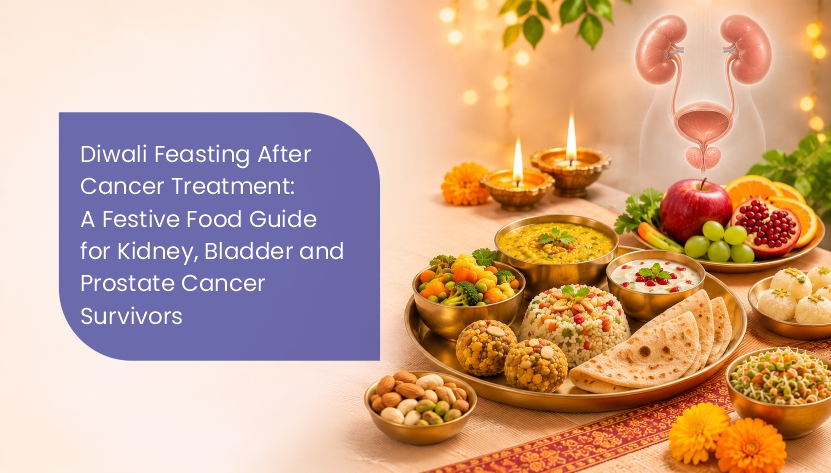
Diwali Feasting After Cancer Treatment: A Festive Food Guide for Kidney, Bladder and Prostate Cancer Survivors
For most families, Diwali begins in the kitchen. Days before the first diya is lit, homes fill with the smell of frying chakli, roasting besan and simmering sugar syrup. Boxes of kaju katli and soan papdi pile up on the dining table, and every visit to a neighbour comes with a plate of farsan that is impolite to refuse.
For a person who has recently finished treatment for kidney, bladder or prostate cancer, this abundance can feel complicated. There is relief at being well enough to celebrate, mixed with uncertainty about what the body can now handle. Some survivors avoid festive food altogether out of fear. Others eat freely, assuming one week cannot matter.
The balance is individual. Diwali does not necessarily require avoiding festive foods, but choices may need to reflect the treatment received, kidney function, medicines and any advice from the treating team.
Why the Body Responds Differently After Treatment
Cancer treatment can lead to changes that affect nutrition, hydration or food tolerance, although these changes do not occur in every person:
- Removal of all or part of a kidney may reduce kidney function in some people, affecting individual advice on salt, protein and certain nutrients
- Some forms of bladder surgery with urinary diversion can change fluid and electrolyte needs
- Hormone therapy for prostate cancer may contribute to weight gain and changes in blood glucose or metabolic health
- Chemotherapy and radiation may affect digestion or food tolerance during and after treatment
Many Diwali snacks and sweets contain substantial amounts of salt, sugar or fat. For example, the sodium content of packaged farsan varies widely by product and portion. A person with kidney impairment, diabetes or digestive symptoms may need a different approach from someone without these concerns.
Festive Foods Worth Considering Carefully
Salty Farsan and Namkeen
Sev, chevdo, bhakarwadi, mathiya and packaged namkeen may contain substantial sodium. High sodium intake can contribute to blood pressure and fluid-balance concerns, especially when kidney function is reduced. Checking labels and portion sizes can be useful.
Khoya and Milk-Based Mithai
Milk-based sweets should be bought or prepared with appropriate food hygiene and stored safely. Contaminated or poorly stored food can cause gastrointestinal illness. Vomiting or diarrhoea may increase dehydration risk, particularly for people with reduced kidney function or those recovering from treatment.
Deep-Fried Snacks Reheated in Old Oil
Repeatedly heated cooking oil is best avoided as a general food-safety practice. Rich, fried foods may also worsen bloating, acidity or diarrhoea for individuals who are experiencing digestive sensitivity following treatment.
Dry Fruit Boxes
Dates, apricots, raisins and figs contain potassium, but they do not need to be avoided by every cancer survivor. Potassium restrictions should follow individual blood test results and kidney-care advice rather than a blanket rule.
Guidance by Cancer Type
Kidney Cancer Survivors
- Choose homemade or clearly labelled snacks when reducing sodium has been advised
- Check with a clinician before taking over-the-counter pain medicines, particularly anti-inflammatory medicines, if kidney function is reduced
- Follow individual potassium, protein and fluid guidance when advised; routine restrictions are not necessary for everyone
Bladder Cancer Survivors
- If urinary symptoms persist after TURBT or BCG therapy, note whether spicy foods, caffeine or aerated drinks worsen them and discuss symptom management with the treating team
- People with a neobladder or ileal conduit should follow their treating team’s individual hydration and electrolyte advice; fluid requirements vary
- Avoid tobacco, including hookah. Smoking is an established risk factor for bladder cancer and is associated with poorer bladder cancer outcomes, including recurrence
Prostate Cancer Survivors
- Men receiving hormone therapy should follow personalised dietary and blood-glucose monitoring advice, especially if diabetes or metabolic risk factors are present
- For post-surgery urinary leakage, reducing evening caffeine or alcohol may help some people; avoid restricting fluids excessively without medical advice
- Include suitable dietary sources of calcium and discuss vitamin D, exercise and bone-health monitoring with the treating team when receiving long-term hormone therapy
Smart Swaps for the Festive Plate
The following are examples of possible substitutions, subject to any personal dietary restrictions:
- Unsalted roasted makhana or chana in place of some packaged salty snacks, if suitable for the individual diet
- A smaller portion of a preferred sweet rather than several large servings
- Homemade kheer or shrikhand with less added sugar if blood-glucose control is a concern
- Water, or an appropriate unsweetened drink, rather than frequent sugary beverages, unless fluid restrictions apply
- Freshly prepared salad as an accompaniment, with appropriate food hygiene and any treatment-related food precautions
Planning the Five Days
There is no fixed five-day dietary formula. These habits may help some people balance celebrations with existing treatment advice:
- Decide in advance which day will be the main celebration meal, and keep the other days lighter
- Eat a proper breakfast before visiting relatives so that snack plates do not become a meal
- Keep medicines on a fixed schedule even during late nights and travel
- Consider light activity, such as a short walk after meals, if medically appropriate and comfortable
- Avoid unnecessary exposure to heavy firecracker smoke, particularly if respiratory symptoms or treatment-related sensitivity are present
Warning Signs After the Festival
Some symptoms require medical attention regardless of festive eating. Contact the treating team promptly for the following, and seek urgent care for severe symptoms:
- Swelling of the feet, ankles or face
- A noticeable drop in the amount of urine passed
- Blood in the urine
- Fever, burning urination or foul-smelling urine
- Persistent vomiting or diarrhoea, particularly when accompanied by dizziness, reduced urine output or inability to keep fluids down
Conclusion
Diwali celebrations can include favourite foods after cancer treatment, but dietary choices should reflect the individual’s current health. Attention to food safety, portions, salt intake and hydration may support general wellbeing. People with altered kidney function, urinary diversions or ongoing treatment effects should follow personalised clinical advice.
Festive meals can be enjoyed thoughtfully without replacing the dietary plan recommended by the treating team.
Contact Us
The Gujarat Uro Oncology Associates team offers expert consultation, diagnosis, second opinions, and treatment planning for urological cancers. To learn more or book an appointment, contact 91 75730 04253 or email bakshihemang@yahoo.co.in.