
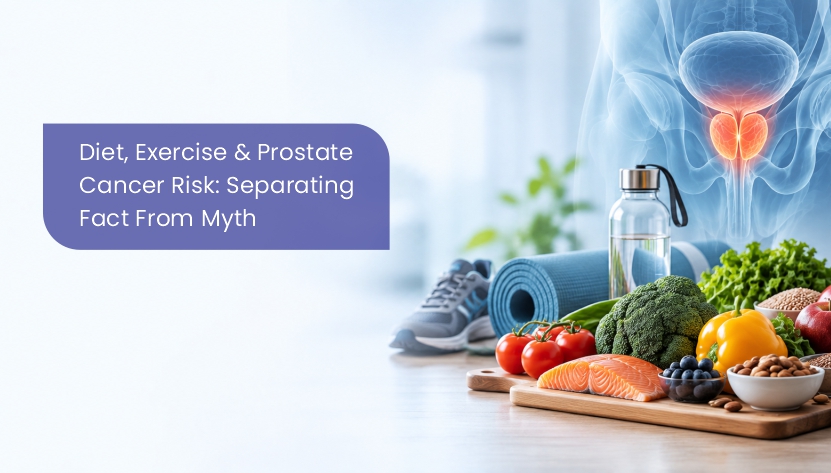
Diet, Exercise & Prostate Cancer Risk: Separating Fact from Myth
Search online for “prostate cancer prevention” and you will find no shortage of confident claims — cut out dairy, take this supplement, avoid this food, do that workout. Some of this advice is grounded in real research; much of it is oversimplified, outdated, or based on studies that were later contradicted. Age, family history, and genetics remain among the strongest drivers of prostate cancer risk, and none of these can be changed. But diet, body weight, and physical activity do appear to influence risk and outcomes to some degree — this blog separates what the evidence actually supports from what is popular myth.
Diet and Prostate Cancer Risk
Nutrition has been studied extensively in relation to prostate cancer. Some patterns appear consistently across research:
- Diets high in red and processed meat have been associated with a somewhat higher risk in several studies
- Diets rich in vegetables — particularly cruciferous vegetables and tomatoes (a source of lycopene) — have been linked to a modestly lower risk, though evidence is not definitive
- High intake of dairy and calcium has been examined as a possible risk factor, though findings remain mixed
- A Mediterranean-style diet — vegetables, fruits, whole grains, fish, and healthy fats, with limited red and processed meat — is generally linked to better overall health outcomes
Body Weight and Physical Activity
Obesity has been linked in research to a higher risk of aggressive prostate cancer and worse outcomes after diagnosis. Regular physical activity, on the other hand, has been associated with a lower risk of aggressive disease and may improve outcomes for men already diagnosed — in addition to its well-established benefits for cardiovascular health and overall quality of life. Maintaining a healthy body weight and staying active are consistently recommended by major cancer organizations, both as possible risk-reduction strategies and because they improve resilience during and after treatment.
Myths vs. Facts: Sorting Through Common Claims
- “High-dose vitamin E and selenium supplements prevent prostate cancer”: A large randomized trial (SELECT) found no protective benefit, and a signal of possible harm with high-dose vitamin E
- “Cutting out all dairy will meaningfully lower your risk”: Evidence links very high dairy and calcium intake to a modest risk signal, but no major guideline recommends eliminating dairy outright
- “A specific superfood or juice can shrink or prevent prostate cancer”: No single food prevents or treats prostate cancer; overall dietary patterns matter more than any one ingredient
- “If you're thin, diet and exercise don't affect your risk”: Body weight and activity appear to influence how aggressive the cancer is and treatment outcomes, not just the odds of developing it
Where Smoking and Alcohol Fit In
Smoking and heavy alcohol use are well-established contributors to cancer risk and have also been associated with poorer prostate cancer outcomes and higher recurrence risk after treatment. No amount of “clean eating” or supplementation offsets the risks of smoking; quitting remains the single most impactful controllable change for cancer risk overall.
Other Factors Being Studied
- Sleep: Disrupted sleep patterns are being explored as a possible risk factor, though the evidence remains preliminary
- Stress and mental health: Not proven to directly cause prostate cancer, but managing stress supports overall health and coping
- Sexual activity and ejaculation frequency: A few studies suggest a possible association with lower risk, though evidence is too preliminary for firm recommendations
Conclusion
No lifestyle change can eliminate prostate cancer risk, particularly for men with strong genetic or family history factors, and no diet or supplement regimen replaces recommended PSA screening based on individual risk and age. Looking beyond the myths, the evidence supports a reasonable, low-risk set of habits: a healthy weight, regular activity, a diet rich in vegetables and lower in processed and red meat, and healthy skepticism toward any single food or supplement marketed as a guaranteed preventive.
Contact Us
The Gujarat Uro Oncology Associates team offers expert consultation, diagnosis, second opinions, and treatment planning for urological cancers. To learn more or book an appointment, contact 91 75730 04253 or email bakshihemang@yahoo.co.in.